Rust solo survival on official servers rewards patience, base design and cheap kits over raw PvP skill
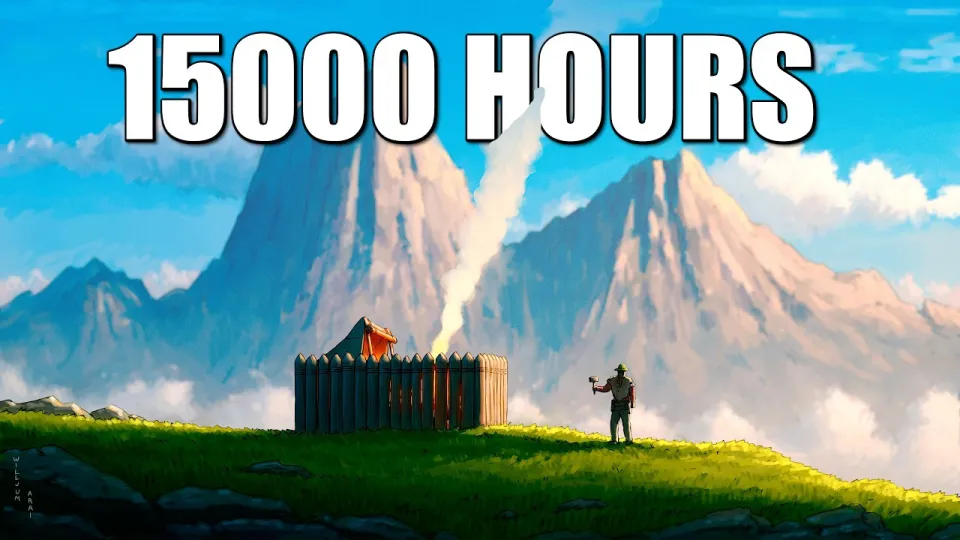
Video: How a solo with 14,782 Hours plays official rust...
Want articles like this for your own video to promote it on YouTube and Google? Order them through the Telegram bot @sat_sit_bot. It writes articles around your video, embeds the video and publishes them on popular niche websites (no ads). Try it free: 50 articles on us.
· based on the channel Willjum
Surviving Rust as a solo on official servers comes down to three habits: pick a base location that nobody wants to raid, keep your kits cheap enough to lose, and treat scrap as a tool rather than a score. A player with 14,782 hours logged demonstrates exactly this approach in a full official wipe, and the takeaway is that longevity in Rust is built on discipline and preparation rather than flick shots. If you want the gear the creator promotes alongside the run, the Manscaped Father's Day offer page carries the discount code used in the video.
What 14,782 hours of Rust actually looks like in practice
Fourteen thousand seven hundred and eighty-two hours is not a flex, it is a behavioural profile: a player who has already made every early-wipe mistake and no longer repeats them. That experience shows up in small decisions rather than highlight-reel plays.
- Base first, loot second. The wipe starts with a defensible footprint, not a rush to monuments.
- Cheap kits only. Nail guns and primitive gear get crafted in bulk, because losing a 30-scrap kit costs nothing emotionally.
- Night work is planned. A candle hat is equipped so the player can see what they are doing while building and farming in the dark.
- No unnecessary fights. Contact is avoided unless the trade is clearly favourable.
The result is a wipe that looks calm from the outside. It is not luck; it is the removal of variance. A solo cannot win a numbers fight against a clan, so the veteran never enters one.
Why official servers are the hardest classroom for a solo
Official vanilla Rust removes every safety net that modded servers provide. Gather rates are standard, there are no team-size caps, and the map is shared with groups of five or more who can farm a base's worth of sulfur in an afternoon.
That environment changes the maths of survival:
- Raid cost is the real defence. A base that requires more explosives than it is worth simply does not get raided.
- Progression is slower but stickier. Blueprints earned on official persist through the monthly cycle, so effort compounds.
- Population density is uneven. Quiet corners of the map trade loot access for safety, and a solo should almost always take that trade.
- Every death has a cost. On a boosted server you respawn and rebuild in minutes; on official, a lost kit can set you back an hour.
The lesson for anyone searching for a working Rust solo strategy is that official servers punish greed and reward boring consistency.
Base design and the details that keep a solo alive
The base featured in the run was built by community builder Luca.Builds, whose compact designs are popular precisely because they suit one player's budget and one player's attention span. Good solo bases share a few traits.
- Small footprint, layered access. Multiple doors and an airlock matter more than square footage.
- Low raid value. Stone and metal with no obvious loot room is less attractive than a honeycombed fortress full of boxes.
- Decoys. Mannequins placed in windows draw fire and attention away from real entry points, a trick used to good effect during the wipe.
- Unremarkable location. A base near a quiet road is safer than a base overlooking Launch Site.
Building is also where most solos waste their first hours. A 2x2 with an airlock, full stone and metal tools is a realistic day-one target; anything larger usually means the player is farming for the raiders rather than for themselves.
Scrap discipline and the cheap-kit mindset
Scrap is the currency that decides how fast a solo reaches the fun part of the game, and the veteran approach is to spend it on infrastructure before firepower. Workbenches, a research table and blueprints come first; weapons come later and cheaply.
A practical order of spending looks like this:
- Workbench level one and a research table.
- Key blueprints for tools and basic weapons.
- A small stash of components for emergency crafts.
- Only then, weapon upgrades.
The running joke in the community is that a player who claims not to spend scrap on weapons is quietly crafting their twenty-eighth nail gun of the wipe. That is not hypocrisy; it is correct economics. A nail gun costs almost nothing, kills an unaware player just fine, and can be replaced without a second thought.
Typical doubts from viewers of solo Rust content
Audiences watching long-form solo survival videos tend to raise the same three concerns, and each has a straightforward answer.
"Isn't it just PvP?" Not on official. The player in the run explicitly frames the wipe as requiring no extraordinary combat skill, and the footage supports it: the wins come from positioning, timing and picking fights that are already won.
"How do you get that many hours?" Fourteen thousand hours spread across more than a decade of Rust's life works out to roughly full-time play for years. Idle time logged while the game sits open inflates the number, but the decision-making on screen reflects genuine familiarity.
"Won't I just get wiped on day one?" Sometimes, yes. The counter is a cheap base, a cheap kit and no hoarding. A solo who loses a stone 2x2 with a bow inside has lost almost nothing.
"Is the game even fun without playing it?" Many viewers watch Rust purely as entertainment, enjoying the variety of content the game produces without ever installing it. That is a legitimate way to enjoy the game, and solo survival series are among the most watchable formats because the stakes are personal.
Common mistakes that end a solo wipe early
The fastest way to lose a solo wipe is to behave like a clan with one member. Hoarding loot in a single room, farming sulfur you cannot use, and picking fights near monuments all shorten a wipe dramatically.
Watch for these failure patterns:
- One big loot room. Split valuables across small, hidden stashes.
- Farming in the open at peak hours. Farm at night or in low-traffic corners.
- Ignoring wildlife. A bear behind you kills more solos than most players do; sound cues matter as much as map awareness.
- Overbuilding on day one. A large base advertises loot you do not have yet.
- Skipping the airlock. One unguarded door is all a raider needs.
Links from the video
- Manscaped Father's Day offer with code WILLJUM15: https://manscaped.com/willjum
- Patreon support page: https://www.patreon.com/Willjum
- Twitch channel: https://www.twitch.tv/willjum
- Twitter profile: https://twitter.com/willjum1
- Creative Commons Attribution 4.0 licence referenced for the music: http://creativecommons.org/licenses/by/4.0/
Final thoughts on playing Rust solo the patient way
The video is a useful reminder that Rust solo survival on official servers is a strategy game wearing a shooter's clothes. Hours of experience translate into restraint: a modest base, cheap kits, careful scrap spending and a refusal to take fair fights. Anyone can copy the pattern, and the first step is simply to stop treating every wipe as a race. The full breakdown comes from Willjum, whose long-form solo survival videos document these wipes from first foundation to final raid; if the grooming gear in the intro caught your eye, the Manscaped offer page is where the code applies.
Key takeaways
- The featured solo player has logged 14,782 hours in Rust, roughly the equivalent of a full-time job sustained for over seven years.
- The run takes place on official vanilla servers, where there are no boosted gather rates, no team limits and no wipe hand-holding.
- The base in the video was built by community builder Luca.Builds, known for compact, defensible solo designs.
- Core survival tools shown include a candle hat for night work, mannequins as decoys and repeated cheap nail gun crafts instead of expensive weapons.
- Official Rust wipes force a full reset of bases and blueprints on a monthly cycle, so every wipe is a fresh start for solos.
Questions & answers
How long does it take to get good at Rust as a solo?
Most players need a few hundred hours just to learn the map layouts, monuments and crafting tree, and several hundred more before they stop losing kits to avoidable mistakes. The 14,782-hour figure in the featured run represents years of accumulated decisions rather than a target anyone should chase. Improvement comes fastest from reviewing why each death happened instead of blaming the server.
Can you survive on official Rust servers without strong PvP skills?
Yes, if you avoid fights you cannot win. Official servers reward base placement, cheap kits and map awareness more than aim, and many successful solos simply refuse to contest monuments at busy hours. The trade-off is slower progression and less loot, which is usually the correct trade for a single player.
What is the best base for a solo player in Rust?
A compact design with an airlock, several doors and low raid value beats a large base every time. Community builders such as Luca.Builds publish designs that fit one player's farming budget, and the key principle is that raiders should find the cost of breaking in higher than the loot inside. Decoys like mannequins in windows add another layer of cheap protection.
Why do solo players craft so many cheap weapons instead of saving for better ones?
Because a nail gun or bow costs almost nothing and can be replaced immediately, while a lost rifle sets a solo back significantly in scrap and time. Cheap kits let you take risks, contest small fights and keep pressure on without fear of loss. Veterans spend scrap on workbenches and blueprints first and treat weapons as consumables.
Source: How a solo with 14,782 Hours plays official rust... · Markdown version